Jewelry Journal
Explore styling tips, gift guides, care advice, and the latest jewelry trends.
Styling Tips: Easy Ways to Upgrade Your Everyday Look
Why Personal Style Matters
Personal style is more than clothing. It is a visual expression of personality, confidence, and professionalism. The way you dress influences how others perceive you and, perhaps more importantly, how you perceive yourself.
Many people believe that improving their appearance requires expensive designer labels or a complete wardrobe overhaul. In reality, the best styling tips focus on small, intentional upgrades that create a significant impact over time.
Research consistently shows that clothing can influence confidence, productivity, and social interactions. When people feel comfortable and polished, they often perform better in professional and personal situations.
Good style offers several benefits:
- Improves self-confidence
- Creates a strong first impression
- Simplifies daily decision-making
- Enhances professional credibility
- Reflects personality and values
Rather than chasing every fashion trend, focus on developing a timeless approach that complements your lifestyle. Trends come and go, but a well-developed personal style remains relevant year after year.
Understanding Your Style Foundation
Before purchasing new clothing, it is important to understand the foundation of your style.
Identify Your Lifestyle Needs
Your wardrobe should support your daily activities.
Consider:
- Work requirements
- Social commitments
- Climate conditions
- Travel habits
- Exercise routines
For example, someone working in a corporate environment will need different essentials than a remote freelancer or creative professional.
When your clothing aligns with your lifestyle, getting dressed becomes easier and more enjoyable.
Define Your Signature Style
A signature style creates consistency and confidence.
Ask yourself:
- Which outfits make you feel your best?
- What colors do you wear most often?
- Which clothing pieces receive compliments?
- Which celebrities or public figures inspire your style?
Common style categories include:
| Style Type | Characteristics |
| Classic | Timeless, clean, elegant |
| Casual | Relaxed, comfortable |
| Minimalist | Simple, neutral, refined |
| Modern | Contemporary and trend-aware |
| Creative | Bold colors and unique combinations |
You do not need to fit perfectly into one category. Most people blend elements from multiple styles.
Build a Wardrobe That Works
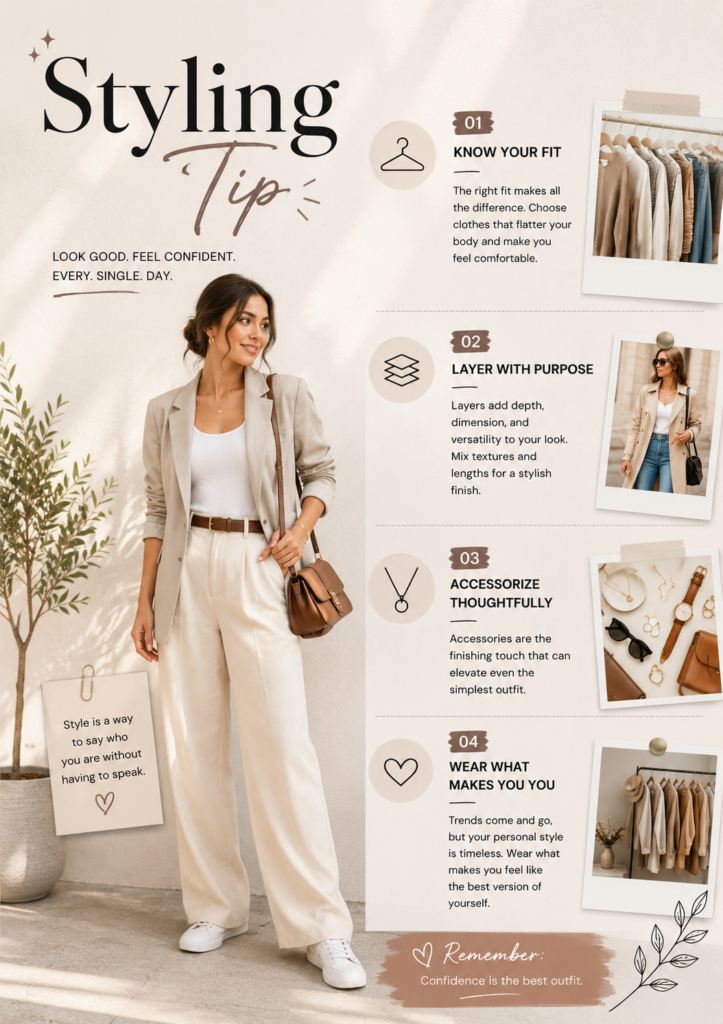
One of the most effective styling tips is creating a wardrobe based on versatility rather than quantity.
Invest in Quality Basics
Quality basics serve as the foundation of countless outfits.
Essential pieces include:
- White button-down shirt
- Neutral t-shirts
- Dark denim jeans
- Tailored trousers
- Classic blazer
- Comfortable sneakers
- Leather shoes
- Neutral knitwear
These items can be mixed and matched across seasons and occasions.
Choose Versatile Pieces
Versatility increases wardrobe efficiency.
Look for clothing that can transition between:
- Work and leisure
- Day and evening
- Casual and semi-formal events
For example, a navy blazer can elevate jeans during the weekend while remaining suitable for professional meetings.
Focus on Proper Fit
Even expensive clothing looks unremarkable when it does not fit properly.
Pay attention to:
- Shoulder alignment
- Sleeve length
- Trouser break
- Waist fit
- Overall proportions
Tailoring is often one of the smartest fashion investments. A modestly priced garment that fits perfectly usually looks better than an expensive garment that fits poorly.
Styling Tips for Everyday Confidence
Small adjustments often create the biggest visual improvements.
Use Color Strategically
Color affects mood, perception, and outfit balance.
General guidelines include:
- Neutral colors provide versatility.
- Accent colors create visual interest.
- Monochromatic outfits appear sophisticated.
- Complementary colors add energy.
Popular neutral shades include:
- Black
- White
- Navy
- Beige
- Gray
- Olive
When introducing brighter colors, start with accessories before expanding to larger clothing pieces.
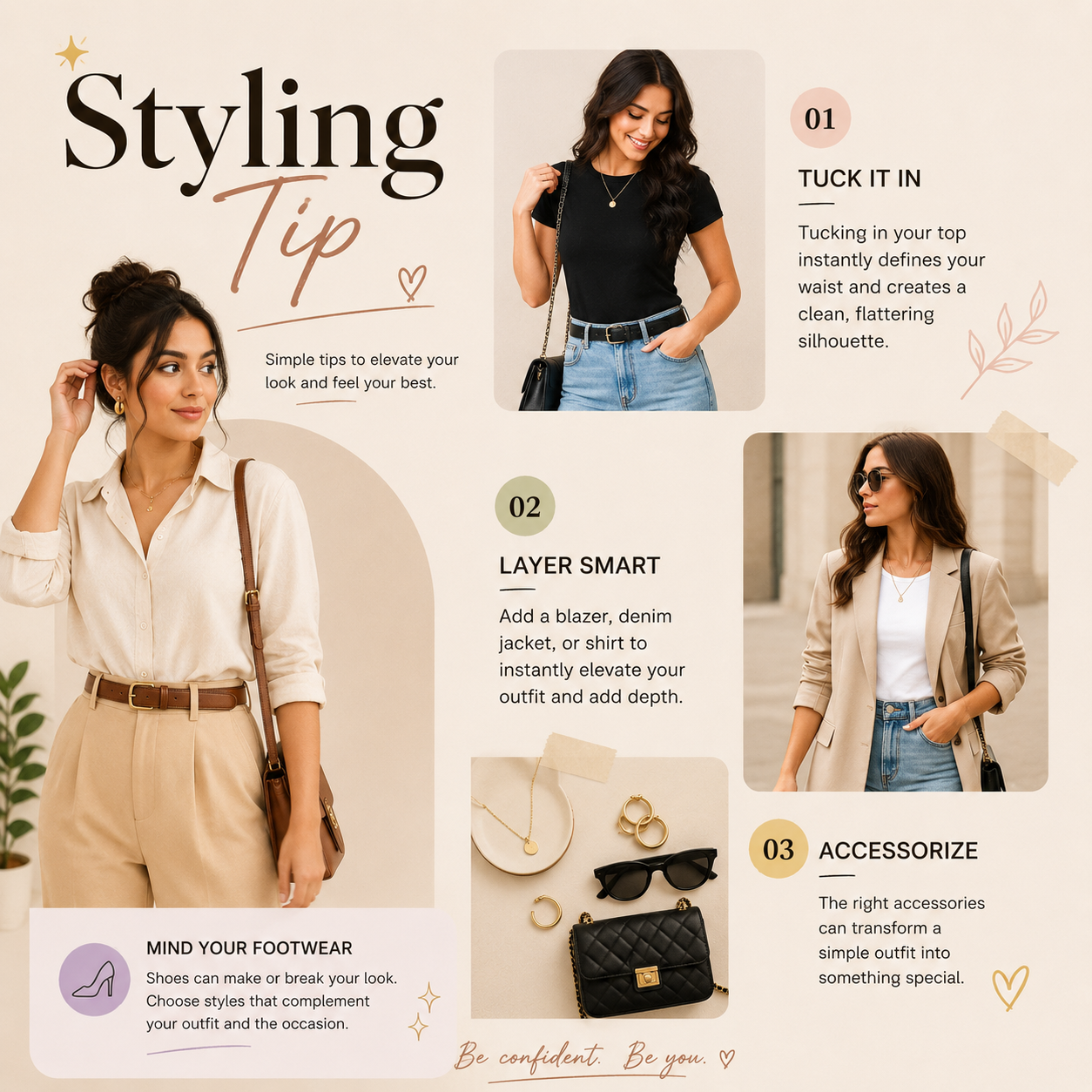
Master Layering Techniques
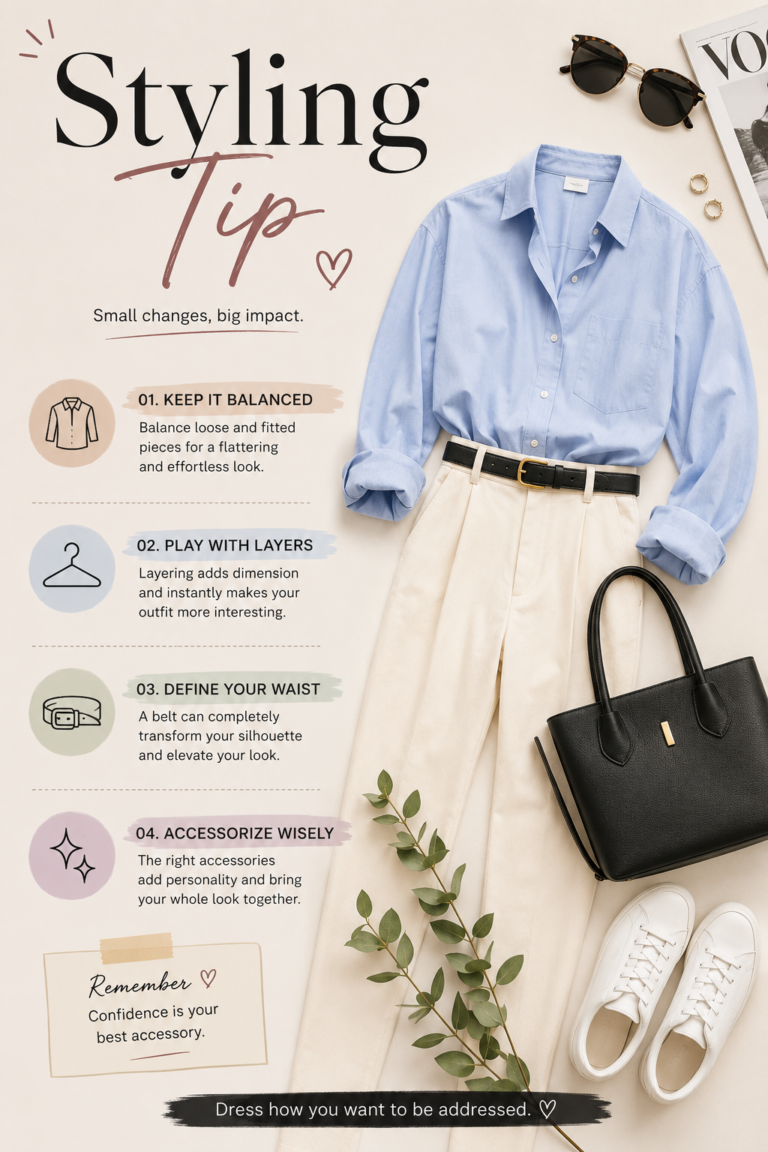
Layering adds depth and sophistication.
Examples include:
- T-shirt + overshirt + jacket
- Shirt + sweater + coat
- Polo + blazer
Effective layering depends on balancing textures, weights, and proportions.
Benefits of layering:
- Increased versatility
- Seasonal adaptability
- Visual interest
- Enhanced comfort
Upgrade Your Accessories
Accessories often determine whether an outfit feels ordinary or polished.
Consider:
- Watches
- Belts
- Sunglasses
- Scarves
- Jewelry
- Handbags
Choose accessories that complement rather than overpower your outfit.
A simple outfit can instantly appear more refined with thoughtfully selected accessories.
Pay Attention to Footwear
Footwear significantly influences overall appearance.
Common options include:
| Footwear Type | Best Use |
| White Sneakers | Casual everyday wear |
| Loafers | Smart-casual settings |
| Oxford Shoes | Formal occasions |
| Boots | Fall and winter outfits |
| Running Shoes | Athletic activities |
Keep shoes clean and maintained. Even the most stylish outfit can lose impact if footwear appears worn or neglected.
Grooming and Presentation
Fashion extends beyond clothing.
Hair Care Essentials
A well-maintained hairstyle creates an immediate impression.
Key practices include:
- Regular trims
- Appropriate styling products
- Consistent maintenance
- Selecting styles suited to face shape
A polished hairstyle often enhances appearance more than buying new clothing.
Skincare and Personal Care
Healthy skin contributes to a fresh and energetic appearance.
A basic routine may include:
- Gentle cleanser
- Moisturizer
- Sunscreen
- Hydration
- Adequate sleep
For expert skincare guidance, resources such as the American Academy of Dermatology can provide useful information.
Confidence Through Posture
One frequently overlooked styling tip is posture.
Standing tall with relaxed shoulders:
- Improves presence
- Enhances confidence
- Makes clothing fit better visually
- Creates a stronger first impression
Even the best outfit cannot fully compensate for poor posture.
Seasonal Styling Tips
Every season presents unique opportunities for improving personal style.
Spring and Summer Style
Warm-weather dressing should prioritize comfort and breathability.
Recommended fabrics:
- Cotton
- Linen
- Lightweight blends
Popular spring and summer essentials include:
- Linen shirts
- Chinos
- Lightweight jackets
- Polo shirts
- Loafers
Choose lighter colors to reflect heat and create a fresh appearance.
Fall and Winter Style
Cooler temperatures allow for richer textures and sophisticated layering.
Consider:
- Wool coats
- Knit sweaters
- Leather boots
- Scarves
- Structured outerwear
Layering becomes especially important during colder months because it combines functionality with style.
Common Fashion Mistakes to Avoid
Many style challenges result from avoidable habits.Common mistakes include:
Following Every Trend
Not every trend suits every person.
Instead:
- Adopt selectively
- Prioritize personal style
- Focus on timeless pieces
Ignoring Fit
Fit remains more important than brand names.
Poorly fitted clothing often appears less polished regardless of price.
Overaccessorizing
Accessories should enhance, not dominate.
Aim for balance and intentionality.
Neglecting Maintenance
Maintain clothing through:
- Proper washing
- Storage practices
- Repairs when needed
- Regular shoe care
Well-maintained garments last longer and consistently look better.
Advanced Styling Strategies
Once foundational habits are established, advanced strategies can further refine your appearance.
Create Outfit Formulas
Successful dressers often rely on repeatable outfit formulas.
Examples:
- White shirt + dark jeans + loafers
- T-shirt + blazer + chinos
- Sweater + trousers + boots
These combinations reduce decision fatigue while maintaining consistency.
Build a Capsule Wardrobe
A capsule wardrobe contains a carefully curated collection of versatile pieces.
Benefits include:
- Less clutter
- Faster outfit selection
- Better cost efficiency
- Stronger style consistency
Sample capsule wardrobe:
| Category | Quantity |
| T-Shirts | 5-7 |
| Shirts | 4-6 |
| Trousers | 3-5 |
| Jeans | 2-3 |
| Jackets | 2-3 |
| Shoes | 3-4 |
By focusing on quality and coordination, every item serves a purpose.
Frequently Asked Questions
1. What are the easiest styling tips for beginners?
Start with proper fit, neutral colors, clean footwear, and quality basics. These foundational improvements create noticeable results quickly.
2. How can I improve my style on a budget?
Focus on versatile essentials, shop strategically during sales, and prioritize tailoring over purchasing numerous new items.
3. How many clothes do I need for a stylish wardrobe?
The exact number varies, but a carefully selected capsule wardrobe can provide dozens of outfit combinations with relatively few pieces.
4. Do accessories really make a difference?
Yes. Accessories often provide the finishing touch that transforms a basic outfit into a polished and intentional look.
5. How often should I update my wardrobe?
Review your wardrobe seasonally. Replace worn items and add pieces that support evolving lifestyle needs.
Conclusion
Developing a stronger personal appearance does not require dramatic changes. The most effective styling tips focus on intentional improvements that build upon one another. By prioritizing fit, quality basics, strategic color choices, thoughtful accessories, proper grooming, and wardrobe versatility, anyone can upgrade their everyday look.
Style is ultimately a skill rather than a talent. The more attention you give to understanding what works for your body, lifestyle, and goals, the more confident and authentic your appearance will become. Small adjustments made consistently often create the most powerful results, helping you look polished, feel confident, and present your best self every day.